
Relocating to Seattle for work tends to happen fast. An offer comes through, a start date is set, and suddenly you need somewhere to live in a city where the rental market moves quickly and the best neighborhoods are close to the office. Signing a twelve-month lease before you have even seen the city is a risk many people would rather not take.
That is the problem a furnished home for 30 nights or more is designed to solve. This guide covers the most common housing headaches people run into when moving to Seattle for work, and how to avoid them by choosing the right kind of temporary home near South Lake Union.
Problem 1: You Do Not Know the City Yet
Seattle is built on a narrow strip of land between Lake Washington and Puget Sound, which makes it compact and also confusing for newcomers. Neighborhoods that look close on a map can be separated by a hill, a bridge or the ship canal. Committing to a long lease in the wrong one can mean a commute you regret for a year.
A monthly furnished home lets you live in the city first and decide later. Spending your first month or two close to work gives you time to explore Capitol Hill, Fremont, Ballard and the Eastside before you choose where to settle. Starting with furnished apartments in Seattle taken by the month is one of the simplest ways to buy that time.
Problem 2: Furnishing a Place You Might Not Keep
Moving furniture across the country is expensive, and buying it all new for an apartment you are not sure about is worse. A furnished home that is ready to live in on day one removes that decision entirely.
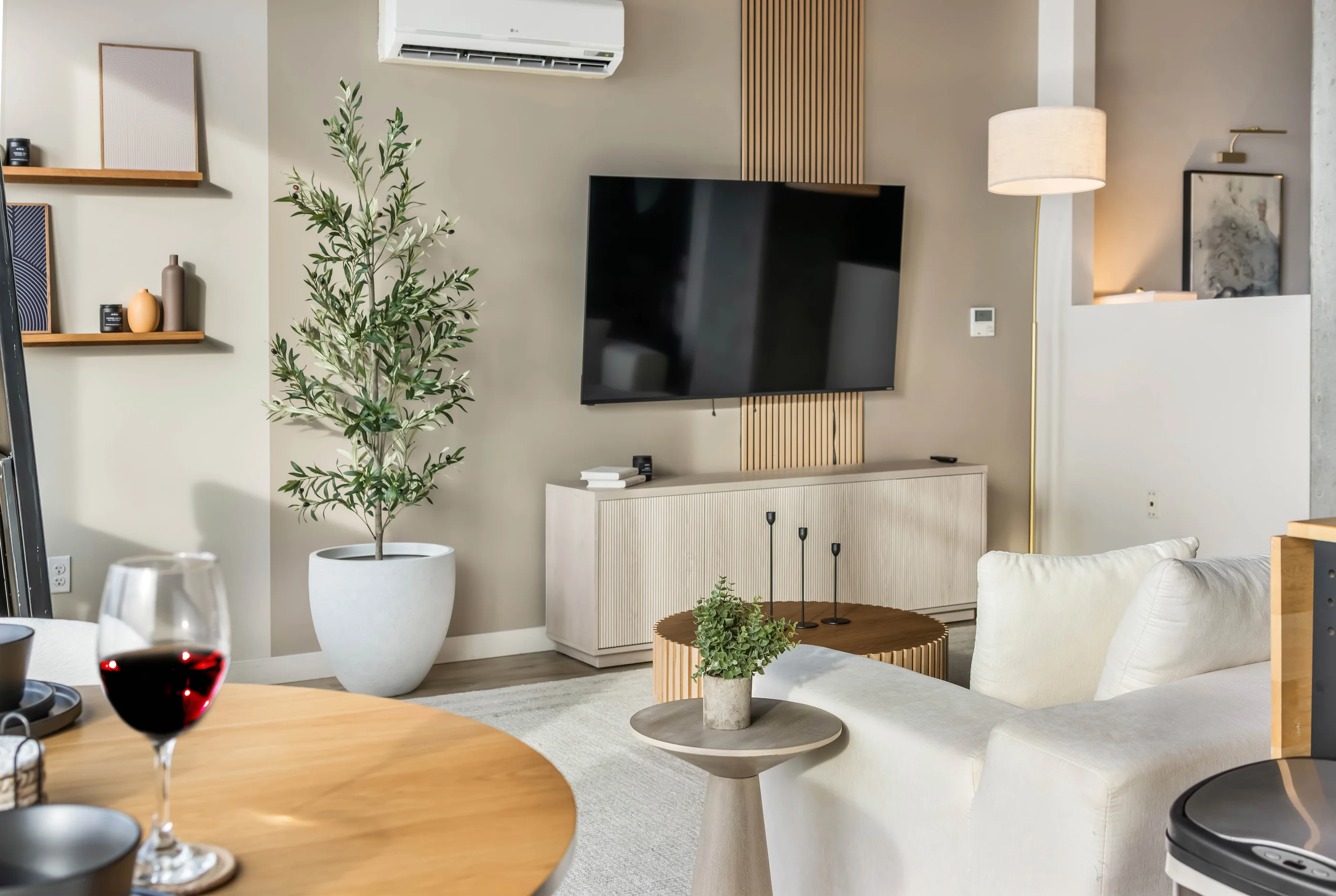
Look for a residence that includes designer furniture, a full kitchen equipped down to the cookware, freshly laundered linens and towels, a washer and dryer in the unit, high-speed Wi-Fi and a smart TV. When utilities are included in the monthly rate, there are no accounts to open and no bills to set up while you are also starting a new job.
Problem 3: The Commute
South Lake Union is home to Amazon's campus and a cluster of research and health institutions, including the Allen Institute, Fred Hutch and the Gates Foundation. For a lot of people relocating to Seattle, that is where the work is.
Living Close to South Lake Union
A home on the south end of Lake Union puts the campuses within walking distance. The streetcar runs to downtown and Pioneer Square in a few minutes, and Pike Place and the waterfront are about fifteen minutes on foot.
Getting Around Without a Car
For city living, a car is optional. The streetcar and light rail cover downtown, and Sea-Tac Airport is about half an hour from downtown by light rail. A car becomes useful if your office is in Redmond or Bellevue across the 520 bridge, or if you plan weekend trips to the mountains.
Problem 4: Leases, Deposits and Paperwork
Traditional rentals in Seattle usually mean an application, a credit check, a deposit and a twelve-month commitment. If your role might change, or you are not sure the city is a long-term fit, that is a lot of paperwork for an uncertain outcome.
Some monthly furnished providers have no lease to negotiate, no security deposit and no broker fee. You book the dates you need and extend if your plans change. For someone in their first weeks at a new company, that flexibility removes a lot of stress.
Problem 5: The Weather Surprise
Seattle's reputation for rain is mostly a reputation for grey. From about October to May, the sky sits under a long, soft overcast. Then summer arrives and is among the best in the country. If you are relocating, it helps to know which half of the year you are landing in.
Arriving in the darker months is a good reason to choose a building with a gym, a lounge and good light inside the apartment. A month of grey is much easier with a place that feels comfortable to come home to.
A Simple Checklist for Your First Seattle Home
- Minimum stay of 30 nights, with the option to extend
- No lease, deposit or broker fee
- Walking or streetcar distance to your office
- Full kitchen and in-unit laundry
- High-speed Wi-Fi and a proper place to work
- A building with a gym and shared spaces
- A support team you can reach when something needs fixing
When Your Employer Is Arranging the Stay
If your company's HR or mobility team is booking your housing, they will usually care about two things: predictable cost and a consistent standard. A provider that furnishes and maintains its own residences, rather than listing whatever an owner already has, makes both easier to guarantee.
That is how Seattle corporate housing near South Lake Union from World Class® works. The residences at Griffis Waterfront are furnished by the company's own design team to the same specification used in its other cities, with a pool, fitness room and lounge in the building and utilities inside the monthly rate.
Settle In First, Decide Later
The smartest move for many people relocating to Seattle is not to choose a permanent neighborhood right away. Take a furnished home close to work for your first month or two, learn how the city fits together, and then sign a long lease once you know where you actually want to live. A stay of 30 nights or more gives you a calm start in a fast-moving city, and the freedom to make your next decision with real information.