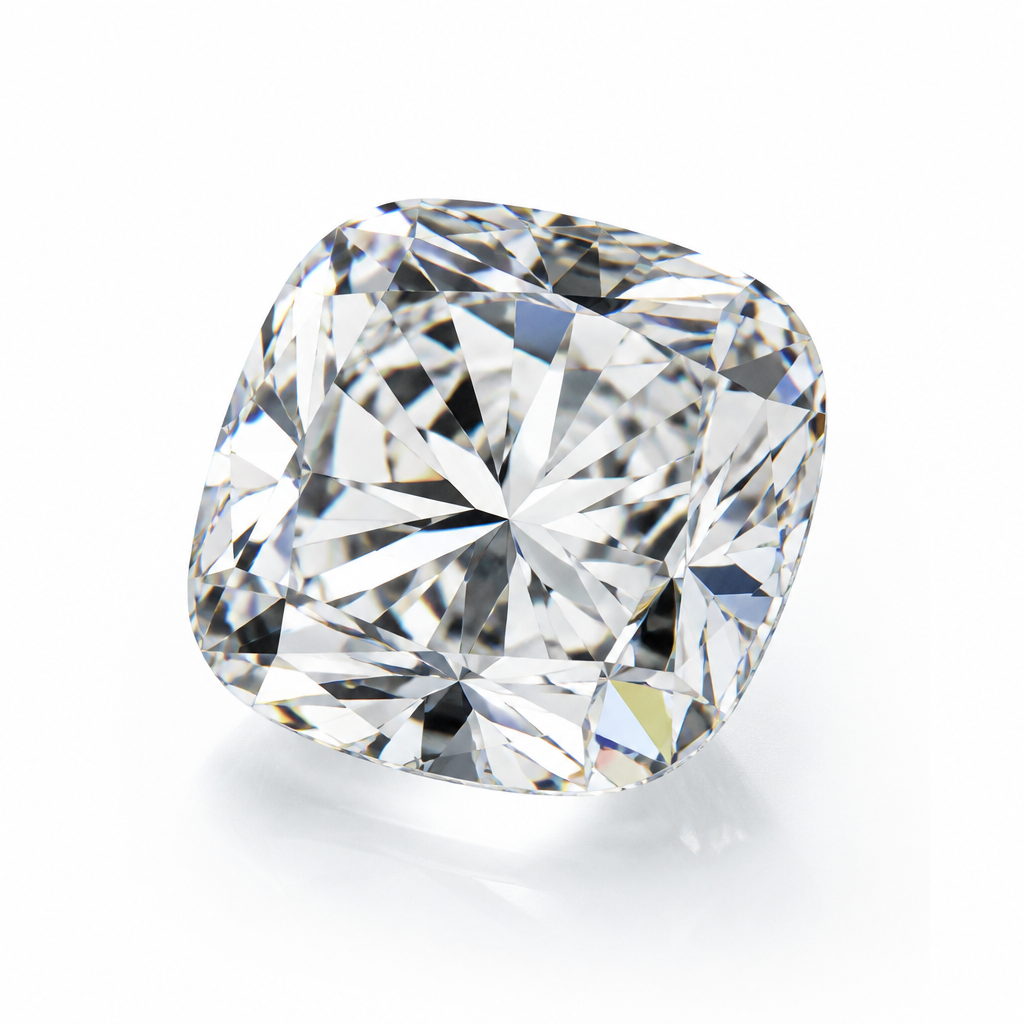
When most people think of diamonds, they picture miners digging deep into the earth under harsh conditions to unearth a rough stone that will eventually become a sparkling gem. But modern science has changed the game entirely. Chemical Vapor Deposition (CVD) technology now makes it possible to grow diamonds in a controlled laboratory environment — and the results are, in every measurable sense, real diamonds.
A CVD lab-grown diamond is not a simulant like cubic zirconia or moissanite. It is not a synthetic substitute. It is a genuine diamond: pure carbon atoms arranged in the exact same crystal lattice structure as a naturally occurring diamond. The only difference is where it was born — underground over billions of years, or in a laboratory over a matter of weeks.
The CVD Process: Growing a Diamond Atom by Atom
Chemical Vapor Deposition is a sophisticated process that replicates the natural conditions under which diamonds form, but in a highly precise, controlled environment. Here is a step-by-step breakdown of how it works:
Step 1: The Diamond Seed
The process begins with a thin diamond seed crystal — a tiny slice of an existing diamond, typically less than a millimeter thick. This seed serves as the foundation on which the new diamond will grow. It is placed inside a sealed growth chamber.
Step 2: Introducing the Carbon Gas
The chamber is then filled with a mixture of carbon-rich gases, most commonly methane (CH₄) combined with hydrogen (H₂). The precise ratios of these gases are carefully monitored and controlled throughout the entire growth cycle. The composition of the gas mixture directly influences the quality and color of the resulting diamond.
Step 3: Microwave Energy Activation
Microwave energy (or in some variants of the process, a hot filament) is introduced into the chamber. This energy breaks apart the molecular bonds in the gas mixture, releasing free carbon atoms and creating a plasma — a superheated cloud of ionized gas glowing at temperatures exceeding 3,000 degrees Celsius. The hydrogen in the mix plays a critical role here: it etches away non-diamond carbon forms, ensuring that only diamond carbon bonds to the seed crystal.
Step 4: Layer-by-Layer Growth
The free carbon atoms in the plasma slowly settle onto the diamond seed, bonding in the same cubic crystal lattice pattern as natural diamonds. Layer by layer, over days or weeks depending on the desired carat weight, the diamond grows upward from the seed. The process is painstakingly slow and requires constant monitoring to prevent defects in the crystal structure.
Step 5: Cutting and Polishing
Once the rough CVD diamond has reached the target size, it is removed from the growth chamber and undergoes the same cutting, shaping, and polishing processes as a mined diamond. Skilled artisans facet each stone to maximize its brilliance, fire, and scintillation. EX3 Diamond, for instance, hand-facets and hand-sets every stone they sell — a level of craftsmanship rarely seen in the mass jewelry market.
Are CVD Diamonds Really Identical to Mined Diamonds?
Yes — and this is the point that surprises most people when they first learn about lab-grown diamonds. CVD diamonds and mined diamonds share the exact same chemical formula: pure carbon (C) in a diamond cubic crystal structure. They have the same hardness (10 on the Mohs scale), the same refractive index (2.42), the same thermal conductivity, and the same optical properties.
Even trained gemologists using standard jewelry loupes cannot distinguish a CVD diamond from a mined one with the naked eye. Only highly specialized equipment from gemological laboratories — measuring specific growth characteristics invisible to the human eye — can tell them apart. And both a CVD diamond and a mined diamond receive the same grades on the classic 4Cs: Cut, Color, Clarity, and Carat weight.
The Gemological Institute of America (GIA), the world's foremost authority on gemstone grading, issues full grading reports for lab-grown diamonds using the exact same criteria it applies to mined stones. A D-color, VVS1-clarity CVD diamond is graded identically to a D-color, VVS1-clarity mined diamond.
Inclusions and Clarity in CVD Diamonds
Like mined diamonds, CVD diamonds can contain inclusions — tiny internal characteristics that form during the growth process. Some inclusions found in CVD diamonds are unique to the growth method, such as dark graphitic inclusions or strain-related features. However, high-quality CVD production techniques have advanced to the point where many CVD diamonds are grown with eye-clean clarity, rivaling the best mined stones.
Post-growth treatment processes, including High Pressure High Temperature (HPHT) annealing, can be used to reduce color and certain types of inclusions in CVD diamonds. Any treated stone should be disclosed as such — and reputable jewelers in the lab-grown space are transparent about whether their stones have been post-growth treated.
Why CVD Technology Matters for Consumers
The advent of CVD technology has democratized access to genuine diamonds. For decades, the high price of mined diamonds placed them out of reach for many buyers. Lab-grown CVD diamonds offer the same optical beauty and physical properties at significantly lower price points, allowing consumers to invest in larger, higher-quality stones within the same budget.
Beyond price, CVD technology offers traceability. Knowing that your diamond was grown in a controlled facility — without the environmental disruption of open-pit mining or the ethical concerns historically associated with mined diamonds — provides peace of mind that the traditional diamond market has struggled to offer at scale.
Brands like EX3 Diamond have built their entire philosophy around CVD lab-grown stones, combining the science of controlled diamond growth with old-world craftsmanship. Each piece is hand-faceted and hand-set in Illinois — bringing together cutting-edge materials science and skilled human artistry in a way that honors both the gem and the buyer.
The Future of CVD Diamond Technology
CVD technology continues to advance rapidly. Growth chambers are becoming more efficient, allowing for larger rough diamonds to be produced in shorter timeframes. The color range achievable through CVD has expanded significantly, with producers now capable of growing near-colorless and even fancy-colored diamonds with high precision.
As the technology matures, the cost of production continues to fall, and the quality ceiling continues to rise. Industry observers widely expect lab-grown CVD diamonds to represent an increasingly significant share of the global gem market in the coming decade — not as a replacement for mined diamonds in every segment, but as a compelling, scientifically credible alternative that meets consumers where their values and budgets align.
For anyone who has ever wanted a beautiful, genuine diamond but felt conflicted about the conventional supply chain, CVD lab-grown diamonds represent a remarkable convergence of scientific achievement and consumer-friendly accessibility. The atom-by-atom precision of the process, the gem-quality results it produces, and the transparency it enables have fundamentally changed what it means to wear a diamond.
]]>